
LVP vs. Laminate in 2026: Which Flooring Makes More Sense for Texas Homes?
For years, the choice between luxury vinyl plank and laminate seemed relatively straightforward. Homeowners who wanted better protection from water often leaned toward LVP. Those who wanted an affordable alternative to hardwood might have considered laminate.
That distinction is no longer quite so simple.
Both flooring categories have changed. Modern laminate can offer stronger water resistance and remarkably convincing wood visuals, while today's luxury vinyl plank comes in an enormous range of constructions, thicknesses and performance levels. A homeowner comparing the two in 2026 is not necessarily choosing between a good floor and a better one. The more useful question is which floor makes sense for the way a particular home is used.
That distinction matters in Bryan, College Station and throughout Brazos County, where busy households, pets, concrete foundations and the Texas climate can all influence how a floor performs.
The Materials May Look Similar, but They Are Not the Same
Walk through a flooring showroom today and it can be surprisingly difficult to distinguish a quality laminate plank from LVP based on appearance alone. Both categories can reproduce oak, hickory and other natural wood visuals with detailed textures and varied plank designs.
What lies beneath the image is considerably different.
Laminate typically uses a wood based core beneath a decorative image and protective surface layer. The North American Laminate Flooring Association defines modern laminate as a multilayer, wood based rigid flooring product and evaluates products for characteristics beyond appearance alone, including wear, impact and stain performance.
Luxury vinyl plank uses a resilient construction rather than a wood based core. Depending on the product, it may use a rigid core designed to provide dimensional stability while maintaining the water resistant qualities that helped make LVP so popular.
Those construction differences influence how each floor feels, sounds and responds to everyday conditions.
Suggested source: North American Laminate Flooring Association, Product Certification Standards
Water Resistance Is More Complicated Than It Used to Be
This is perhaps where older comparisons between laminate and LVP have become least useful.
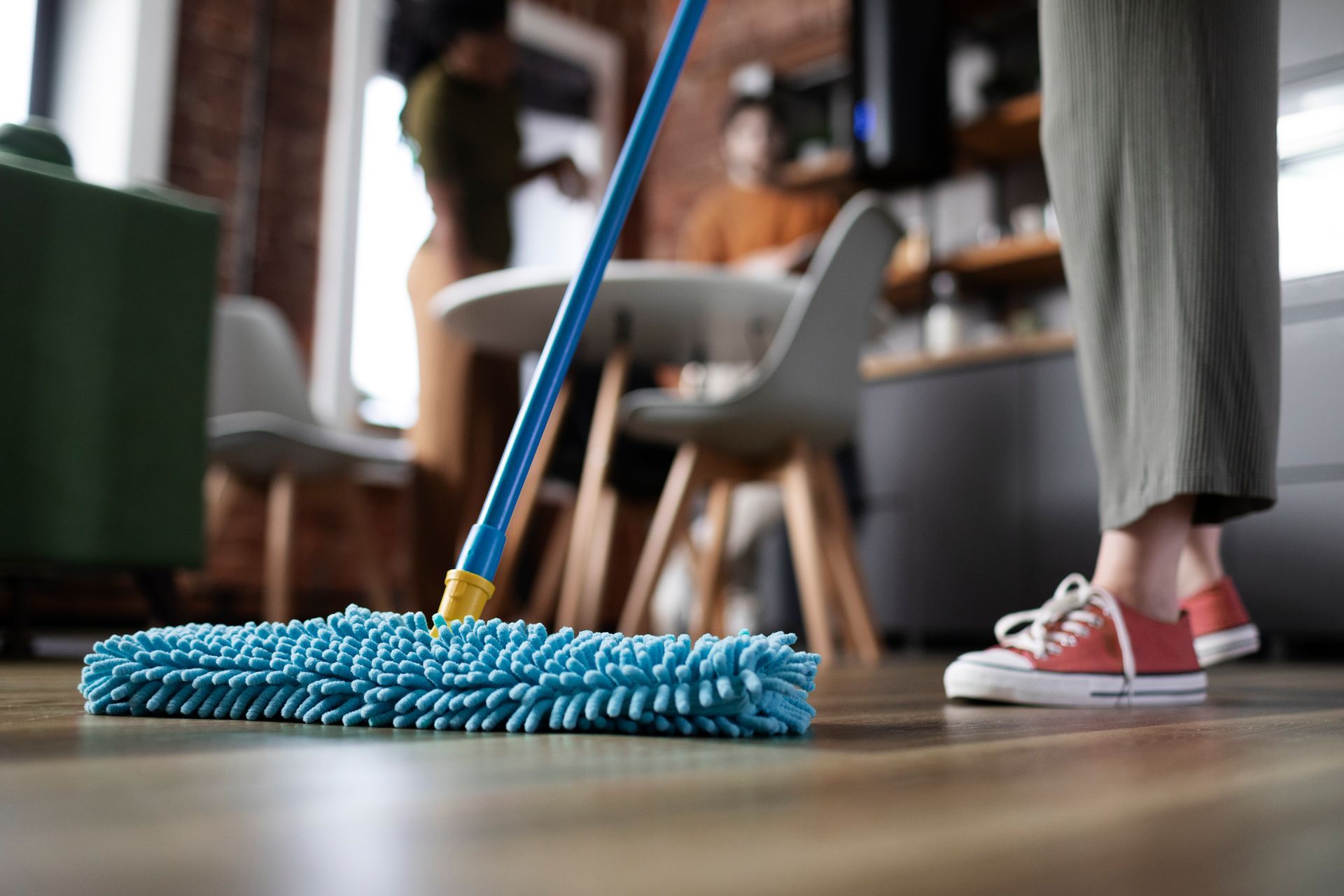
Luxury vinyl remains an attractive option for kitchens, living areas and other spaces where spills are part of daily life. The material itself is not easily damaged by ordinary surface moisture. That is one reason LVP has become such a common choice for whole home installations.
Laminate, however, should no longer automatically be dismissed whenever water enters the conversation. Water resistant and waterproof laminate systems have improved considerably, although the exact protection depends on the individual product and how it is installed.
There is another distinction that matters in Texas: a waterproof floor covering does not waterproof the concrete beneath it.
Moisture vapor moving through a concrete slab is a different issue from a glass of water spilling on top of a plank. For homes built on concrete foundations, the condition of the substrate and the flooring manufacturer's installation requirements still matter regardless of which material is selected.
That is also why comparing flooring by the word "waterproof" on a display alone can be misleading.
What About Scratches, Pets and Busy Households?
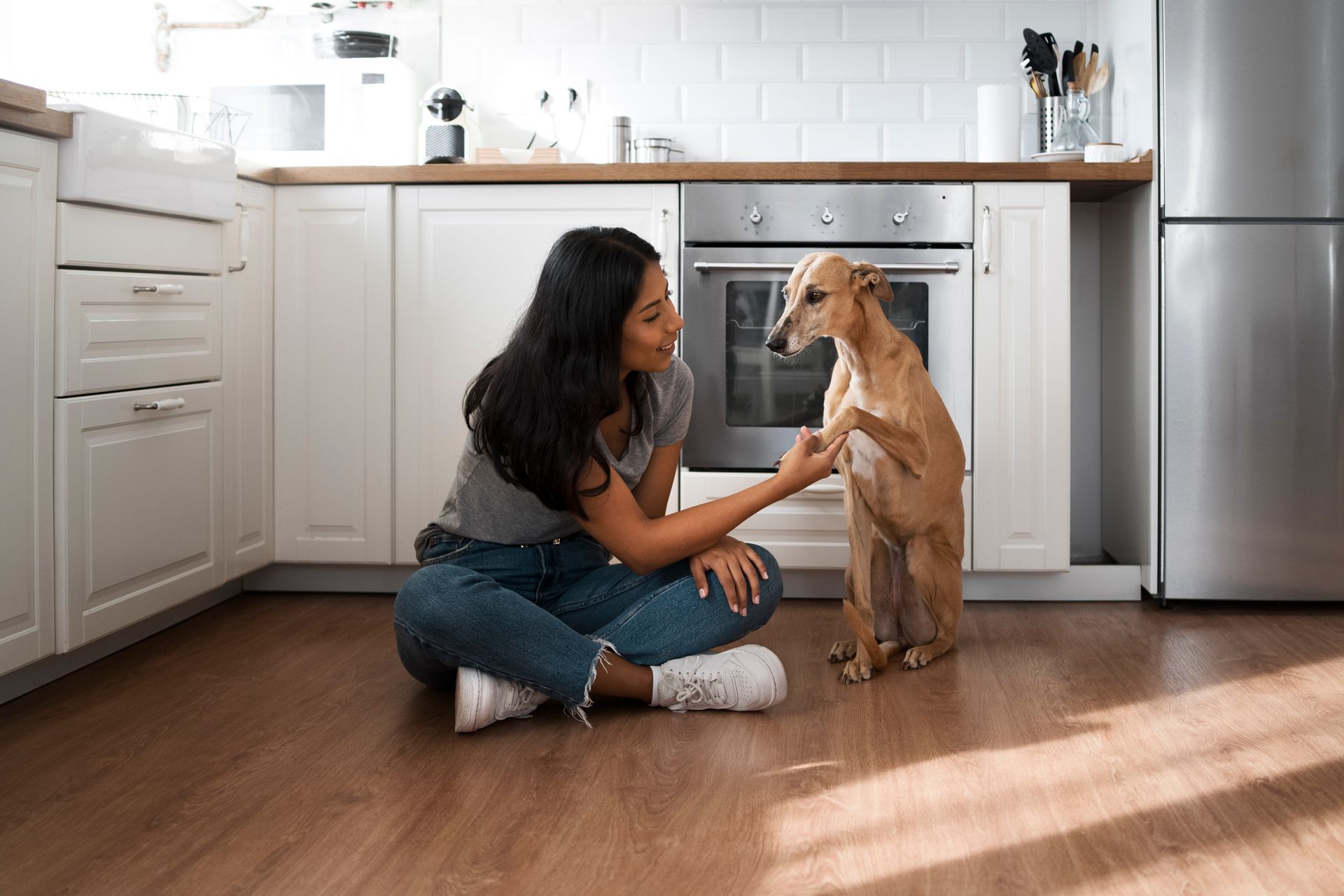
For a family with dogs, children or a heavily used living area, durability often matters more than almost anything else.
This is an area where laminate deserves a closer look.
The protective surface of a quality laminate can provide excellent resistance to everyday abrasion. But consumers should be careful about reducing durability to a single number. NALFA notes that an AC rating specifically measures abrasion resistance and should not be interpreted as a universal score for scratching, fading, staining and every other type of flooring performance.
LVP has its own durability advantages. Quality products can handle substantial household traffic and are relatively easy to maintain. Yet LVP is not scratch proof. Furniture dragged across a floor, grit under a chair leg or an unprotected heavy object can damage the surface.
In either category, product quality matters. "LVP" and "laminate" describe broad groups of flooring, not a single standard of performance.
The Feel of the Floor Can Be the Deciding Factor
Specifications are useful, but flooring is something people live on every day.
Laminate's wood based construction can give it a firm feel that some homeowners find closer to traditional hardwood. Advances in embossing and surface texture have also made higher quality laminate considerably more convincing than the glossy products many people remember from years ago.
LVP has a different appeal. It can feel slightly more resilient underfoot and offers enormous flexibility in design and price. For homeowners trying to carry one visual throughout a kitchen, living room, hallway and bedrooms, LVP can be particularly practical.
Neither experience is universally better.
This is one of the reasons flooring is worth seeing in person. Photographs can show color, but they do not communicate texture, plank variation, sound or the feeling of walking across a floor.
Installation Still Matters More Than Many Buyers Expect
A premium floor installed over a poorly prepared substrate can perform worse than a moderately priced floor installed correctly.
That principle applies to both laminate and LVP.
Floating floors depend on properly prepared substrates, correct perimeter spacing and installation practices that follow the requirements of the specific manufacturer. An uneven concrete slab can create movement beneath the planks, place additional stress on locking joints and make an otherwise attractive floor feel less solid.
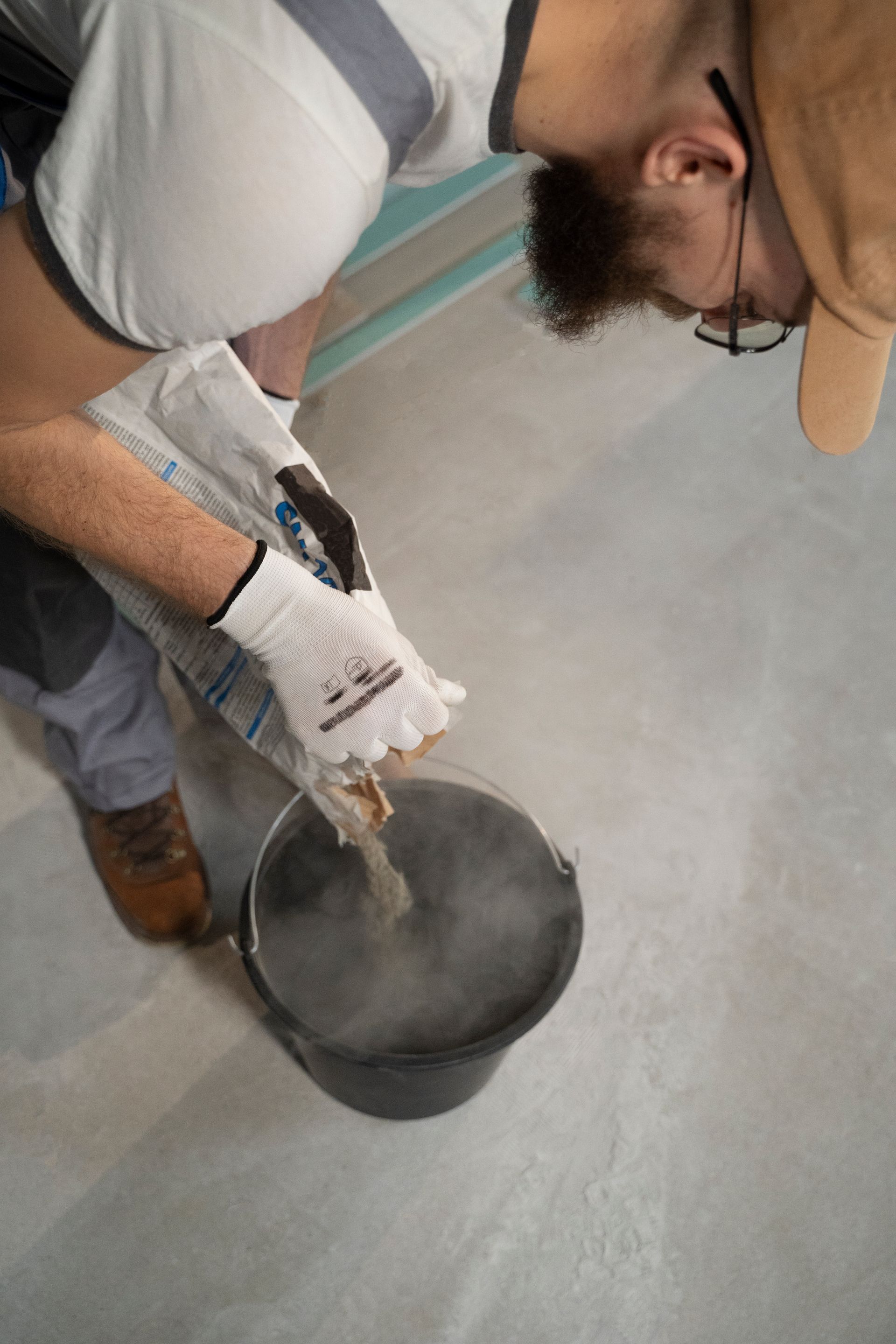
This is especially relevant when remodeling homes in Bryan and College Station. Removing an existing floor often reveals conditions that could not be evaluated beforehand. High areas may need grinding, low areas may require patching, and cracks or moisture conditions may need to be addressed before installation proceeds.
Floor preparation is not the most visible part of a flooring project, but it can be one of the most consequently.
Check out
"Why Floor Preparation Matters More Than the Flooring Itself in Texas Homes."
So, Which One Should You Choose?
There is no longer a convincing reason to declare one category the winner for every home.
LVP can make sense for homeowners who prioritize easy maintenance, broad water resistance and the ability to continue one flooring style through several areas of a home. Laminate deserves serious consideration for homeowners who value a wood like feel, strong surface performance and the increasingly realistic visuals available in modern collections.
The individual product matters just as much as the category.
A household with two large dogs may need something different from a retired couple. A rental property may have different priorities from a custom home. A bedroom does not face the same conditions as a kitchen or entryway.
That is why the better flooring decision begins with the room and the people using it, not simply the label printed on the sample.
Homeowners comparing options can explore Zwernemann Flooring's
luxury vinyl plank and
laminate flooring collections online before seeing the materials in person.
A Better Comparison Starts With the Home
The gap between laminate and luxury vinyl plank has narrowed. Both categories now include products capable of delivering attractive, durable floors when they are selected for the right environment and installed correctly.
For homeowners and builders across College Station, Bryan and Brazos County, that is ultimately more useful than asking which flooring is "best."
The better question is what the floor will be expected to handle.
Then when trying to decide between the laminate and luxury vinyl plank, you realize there are also hybrids. A hybrid is a product that there is not much out there, but essentially combines both a LVP and laminate to make a single product.
Pets, children, moisture exposure, maintenance expectations, the condition of the slab and even how the floor feels underfoot can change the answer. Once those factors are understood, the choice between LVP and laminate becomes much clearer.