
What Homeowners Get Wrong About Luxury Vinyl Plank in Texas Homes
Luxury vinyl plank, often called LVP, has quickly become one of the most popular flooring choices in homes. It is marketed as durable, water resistant, and versatile enough to work in almost any room. For many homeowners in College Station and Bryan, it seems like the easy answer.
But the reality is more nuanced.
While LVP can perform exceptionally well, many of the issues seen in homes across Brazos County do not come from the product itself. They come from misunderstandings about how it works, where it should be used, and what it requires underneath.
Understanding those details before installation can make the difference between a floor that lasts and one that creates problems within the first year.
Misconception 1: “Waterproof” Means Problem Proof
One of the biggest selling points of LVP is that it is often labeled as waterproof. That is true in a specific sense, but it is also one of the most misunderstood features.
The plank itself is resistant to water. What it does not do is stop moisture from coming up through the subfloor.
In many homes throughout College Station and Bryan, concrete slabs allow moisture vapor to move upward.
Without proper moisture control, that vapor can:
- Affect adhesives in glue-down applications
- Lead to odor or mildew beneath the floor
- Create movement or instability over time
Manufacturers like Shaw Industries and Mohawk Industries clearly outline moisture limits and requirements, but those guidelines are often overlooked in residential projects.
Misconception 2: LVP Can Go Over Any Surface
Another common belief is that LVP can simply be installed over existing floors without much preparation.
While it is true that LVP is more forgiving than some materials, it still requires a properly prepared surface.
Even small imperfections can transfer through the finished floor.
In real installations across Brazos County, this often shows up as:
- Visible dips or uneven planks
- Clicking or hollow sounds when walking
- Separation at joints over time
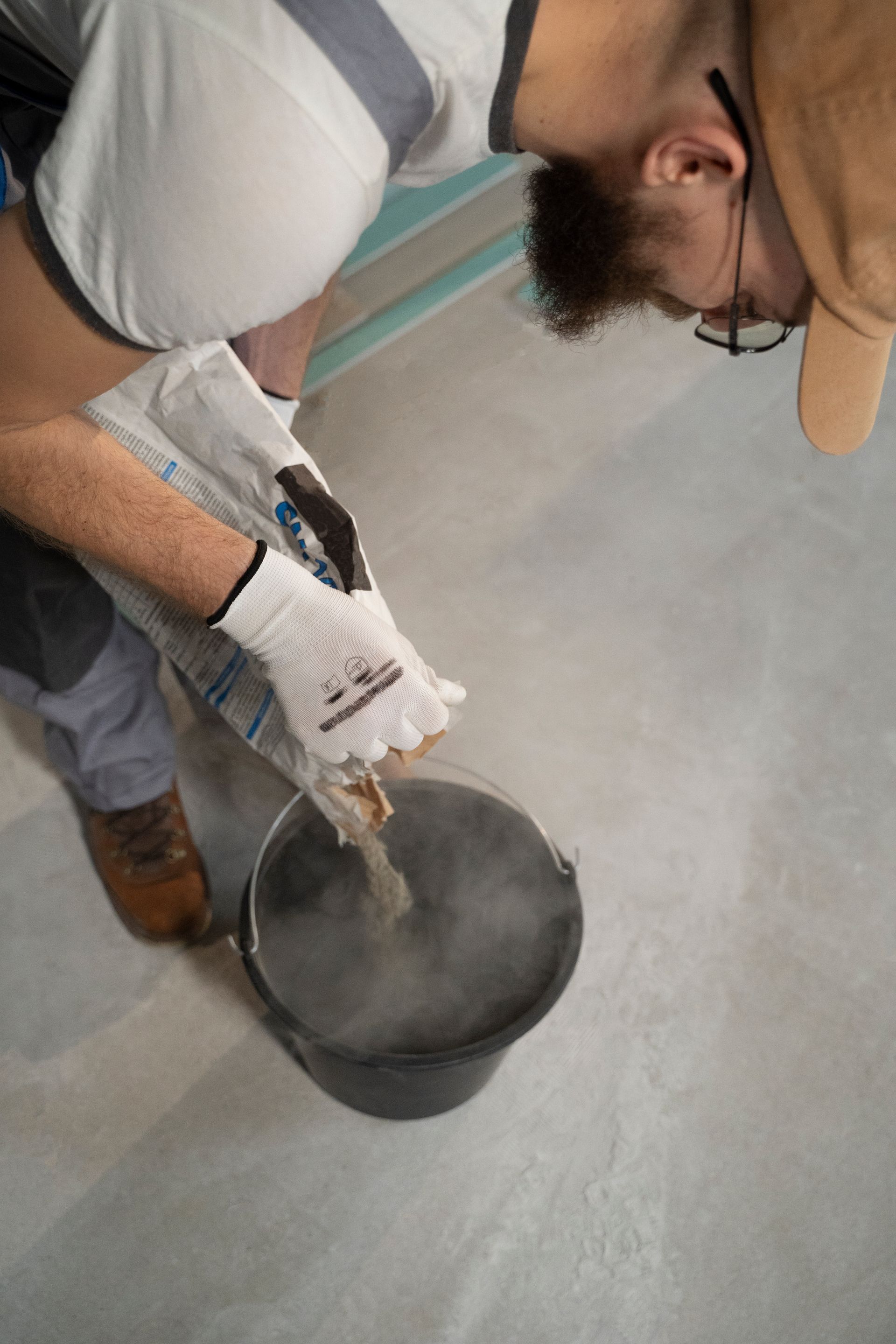
Most manufacturers require very tight flatness tolerances. Achieving this often involves leveling compounds or patching systems from companies like Uzin, Mapei, or Ardex, especially on older slabs.
Skipping this step is one of the fastest ways to shorten the life of the floor.
Misconception 3: All LVP Products Perform the Same
Not all LVP is created equal.
There are significant differences in:
- Core construction
- Wear layer thickness
- Locking systems
- Overall rigidity
Higher-quality products from manufacturers like COREtec, Shaw Industries, and Mohawk Industries are engineered to handle more demanding conditions, including minor subfloor variation and daily wear.
Lower-end products may look similar on the surface but often lack the structural integrity needed for long-term performance.
For homeowners, the difference is not always visible at the time of purchase. It becomes clear months or years after installation.
Misconception 4: Installation Is Simple and Low Risk
Because LVP is often marketed as easy to install, many assume it is a low-risk project.
In reality, installation quality plays a major role in how the floor performs.
In Texas homes, installers must account for:
- Expansion and contraction due to temperature changes
- Proper spacing at walls and transitions
- Direction of installation relative to light and layout
- Subfloor movement and condition
Even small mistakes in these areas can lead to issues like buckling, gapping, or premature wear.
This is why experienced installers spend as much time planning and preparing as they do actually laying the planks.
Misconception 5: It Works in Every Room Without Tradeoffs
LVP is versatile, but it is not always the best choice for every space.
In areas like bathrooms or kitchens, it performs well when installed correctly. However, in spaces with constant moisture exposure or heavy impact, there may be better long-term options.
Tile, for example, remains one of the most stable choices for wet areas when installed with proper systems from manufacturers like Laticrete or Mapei.
In some cases, the best solution is not choosing one product over another, but understanding where each performs best.
What Actually Matters for Long-Term Performance
Across homes in College Station, Bryan, and the surrounding Brazos County area, successful LVP installations tend to have a few things in common:
- Proper subfloor preparation and leveling
- Moisture testing and, when needed, moisture mitigation
- Selection of a quality product suited to the space
- Professional installation that accounts for real-world conditions
- These factors matter far more than color or style alone.
A Smarter Way to Approach LVP
Luxury vinyl plank can be an excellent flooring choice. It offers durability, flexibility, and a wide range of design options that fit both modern and traditional homes.
But like any material, it performs best when it is understood.
In Texas homes, where slab foundations and environmental conditions play a constant role, success comes from paying attention to what is beneath the surface as much as what is on top of it.
For homeowners and builders alike, taking the time to get those details right is what turns a popular product into a reliable long-term investment.